
HR
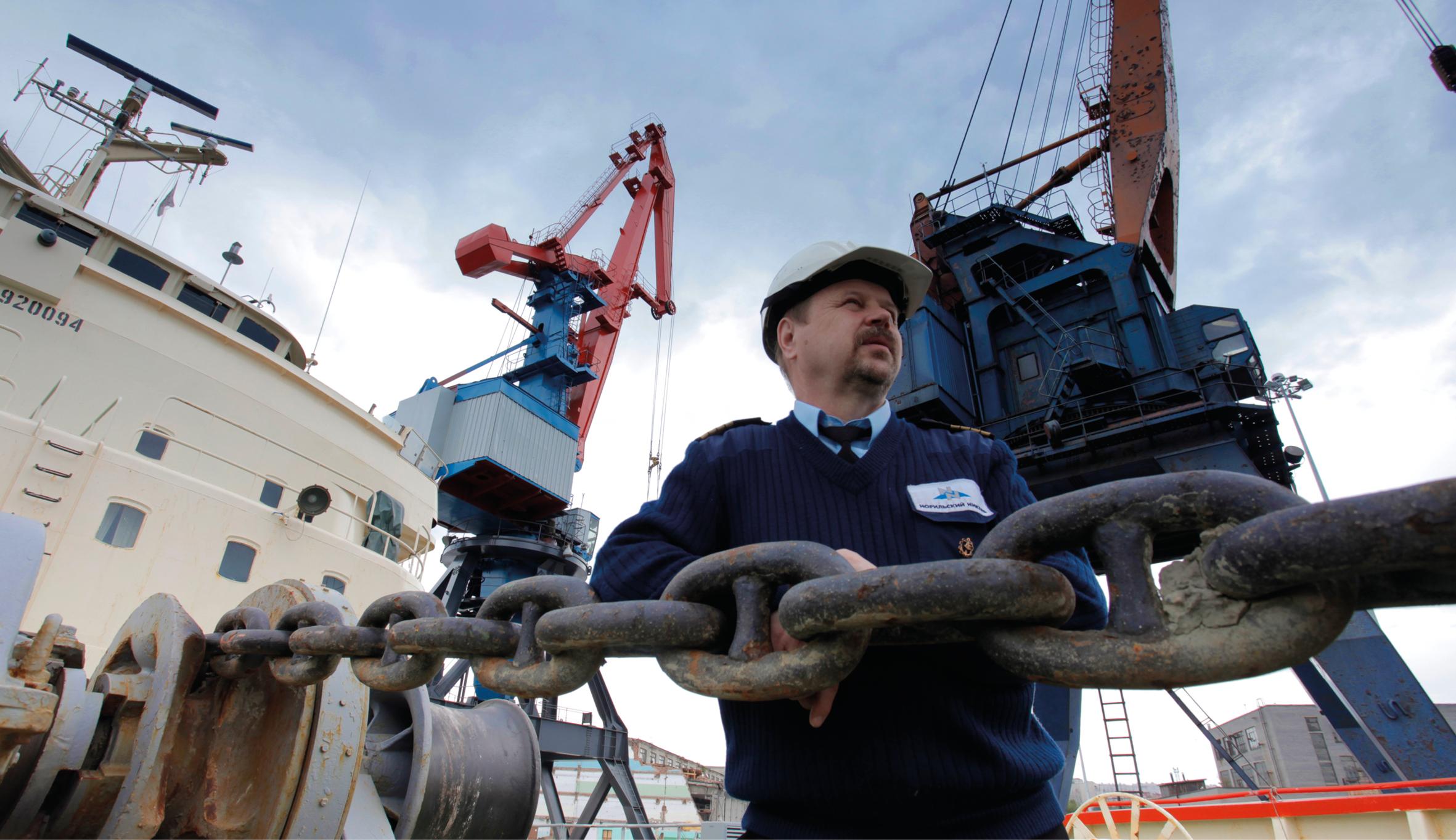
The Company’s HR management strategy is aimed at creating a competitive, highly skilled, responsible and cohesive workforce. The social policy’s top priority is to maintain social stability of the workforce deployed across the Group’s companies and all over its footprint. The successful implementation of the social policy is indispensable for the Company’s long-term sustainable development.
HR development strategy
The long-term HR strategy is set forth in the Human Capital Development Programme adopted in 2014.
The main objectives of the Human Capital Development Programme are as follows:
- increase employee efficiency
- introduce HR segmentation
- implement a targeted approach to the distribution of social benefits
- enhance the Company’s talent pool
- transform and automate the HR management function
2.2 %
Staff composition
In 2015, the Norilsk Nickel Group’s average headcount totalled 81,600 people in Russia and 2,000 people abroad. Most of the Russia-based employees (71% of the Russian headcount) work in Norilsk and the Taimyrsky Dolgano-Nenetsky Municipal District. Another 18% of the Group’s Russian headcount work on the Kola Peninsula and in the Northwestern Federal District.
| 2015 | 2014 | 2013 | |
|---|---|---|---|
| Russia | 81,637 | 79,897 | 83,005 |
| USA | 10 | 10 | 10 |
| Europe | 307 | 290 | 297 |
| Asia | 12 | 12 | 13 |
| Australia | 6 | 15 | 73 |
| South Africa | 870 | 883 | 842 |
| Botswana | 780 | 748 | 756 |
| Indonesia | 2 | — | 2 |
| Total | 83,624 | 81,855 | 84,998 |
The 2.2% headcount increase in 2015 was mainly driven by the greater scope of work related to the Nickel Plant shutdown and implementation of other investment projects.
Efficiency improvement and incentive programmes
Efficiency improvement initiatives
Since 2014, the Company has been implementing the Employee Performance Management System offering a
The Company’s management pays close attention to employee performance. The key objective for the KPI-based assessment in 2016 is to improve the quality of performance metrics, i. e. make KPIs more measurable and targets more ambitious, all while ensuring clear and transparent alignment of any given employee’s KPIs with the business unit’s goals and the Company’s strategy. In 2016, the Company plans to further automate assessment procedures across Norilsk Nickel’s operations.
In 2015, the employees, who underwent a
At the end of the year, the Company launched the first batch of workshops to develop management competencies among the Top 500 managers.
The competency-based assessment covered 126 Top 500 managers at the Head Office and in the segment of key production assets. Of the assessed managers
- 25% (32 persons) were females, and
- 75% (94 persons) were males.
In 2015, the Company implemented a SAP HCM-based automated HR management system. On 1 January 2015, it was launched at the Company’s Head Office and then rolled out to cover Kola MMC and Pechengastroy on 1 July 2015, with Polar Division and the Norilsk Industrial District standing next in line. September 2015 also saw the launch of a business travel automation project (SAP FI-TV), which was first implemented at the Head Office in February 2016 and later rolled out to Kola MMC and Pechengastroy.
Benefits
The largest portion of benefits is represented by the reimbursements of vacation travel expenses (return fare and baggage allowance) for the employees living in the Far North and their families. Since 2012, the Company has been providing such compensations on an annual basis (previously, it reimbursed travel expenses only once every two years). In 2015, Norilsk Nickel spent over USD 102 m on benefits for the employees of its Russian companies (an annual average of USD 1,300 per employee).
Incentive programmes
The key incentive and remuneration principles of the Norilsk Nickel Group include:
 A single approach to the salaries of all employees
 Salary competitiveness in the current labour market environment
 Promotion of the Company’s image as a responsible and reliable employer
 Incentivisation to achieve goals and objectives by improving performance at the individual, business unit and corporate levels
in the Group’s Russian companies, USD

RUB 60.9579 in 2015;
RUB 38.4217 in 2014;
RUB 31.8480 in 2013.

HR segmentation and targeted approach
Segmentation is based on employee involvement in the end-product production and difficulties associated with skill replacement/acquisition. HR segmentation and а segment-specific targeted approach to HR management will enable the Company to focus its resources on the employees who create added value for the business. This will help boost the prestige of key jobs in the labour market and streamline staffing processes. HR segmentation and a targeted approach to remuneration and benefits increase transparency and appeal of the value proposition (a set of tangible and intangible benefits the Company offers to employees) for the staff and their families.
Recruitment
As part of its long-term HR development strategy, the Norilsk Nickel Group implemented a number of initiatives:
- introduction of an alternative recruitment method;
- Career Start-Up, a corporate recruitment programme focusing on graduates from the dedicated Russian universities (291 graduates recruited by now);
- training, retraining, and professional development (over 63,000 of Norilsk Nickel’s employees were retrained in 2015, including more than 18,000 young specialists under 30 years of age; over 38,000 employees were trained in the corporate training centres).
Talent pool enhancement
In 2015, the Company continued upgrading its talent pool management framework. Polar Division’s mining operations were chosen for the pilot project. During the year, the responsible officers were busy approving talent pool approaches, validating assessment tools, testing and building a talent pool covering lower and middle line managers. A team of experts were certified to independently run a Talent Pool Assessment Centre.
In 2015, 51 out of 391 tested contestants were selected to be included in the talent pool. Now they are all set to take part in a variety of tailor-made development and training workshops.
In 2016, the Company plans to continue upgrading its talent pool management framework focusing on the design of uniform approaches to the participants’ development, and the establishment of coaching. Drafting of a Talent Pool Regulation and gradual implementation of the framework across Norilsk Nickel’s operations should come as two final steps of this exercise.
Protection of labour rights
Russian companies of Norilsk Nickel have established a social partnership framework aimed at reconciling interests of employees and employers on matters pertaining to the regulation of social and labour relations.
Employee interests are represented by social and labour councils, and trade union organisations.
The companies provide every support to the employee representative bodies, including by complying with the Russian Labour Code, collective bargaining agreements and joint resolutions.

Trade unions
As at the end of 2015, 12% of employees of Norilsk Nickel’s Russian operations were members of trade union organisations.
42 primary trade union organisations from Norilsk and the Taimyrsky Dolgano-Nenetsky Municipal District were joined to form a single trade union organisation of PJSC MMC Norilsk Nickel and its subsidiaries, and become a member of the Trade Union of MMC Norilsk Nickel Employees, Interregional Public Organisation (the TUEIPO). The TUEIPO includes two trade union organisations from Kola MMC and one each from Zapolyarye Health Resort and Taimyr Air Company. In the reporting year, the relationship between the employer and the TUEIPO was governed by the Social Partnership Agreement signed in 2014 to formalise implementation procedures for joint initiatives ensuring sustainable performance, operating and financial excellence, employee welfare, health and safety, and enhancement of social benefits.
| Company |
|
|---|---|
| Norilsk Nickel enterprises located in Norilsk and the Taimyrsky Dolgano-Nenetsky Municipal District |
8 |
| Krasnoyarsk Shipyard | 8 |
| Gipronickel Institute | 9 |
| Taimyr Air Company | 13 |
| Kola MMC and its subsidiaries | 18 |
| Nordavia-RA | 25 |
| Zapolyarye Health Resort | 33 |
| Krasnoyarsk River Port | 47 |
| Lesosibirsk Port | 52 |
| Arkhangelsk Commercial Sea Port | 53 |
| Yenisey River Shipping Company | 54 |
Social and labour councils
Norilsk Nickel’s Corporate Social and Labour Council has been in place since 2006. It covers approximately 60,000 employees of Norilsk Nickel’s operations from Norilsk and the Taimyrsky Dolgano-Nenetsky Municipal District (Krasnoyarsk Territory). Kola MMC’s Social and Labour Council embraces representatives of social and labour councils from each business unit.
To monitor compliance with the social and labour commitments, the enterprises have set up collective decision making bodies, including but not limited to collective bargaining commissions, labour dispute commissions, social benefits commissions/committees, social insurance commissions, health and safety commissions/committees, and social and labour relations committees.
As part of the social partnership framework implemented in the Russian companies of Norilsk Nickel, employee representatives can openly review production and social programmes rolled out across operations, contribute to the dedicated assessments of working conditions, and implement measures to prevent occupational injuries and diseases among employees working in hazardous conditions.
Social and labour relations are governed by the applicable Russian laws, collective bargaining agreements and local regulations.
84 %
Corporate Trust Service
MMC Norilsk Nickel’s Corporate Trust Service has been in place since February 2010. It helps the Company’s management promptly respond to the reports of abuses, embezzlement and other violations coming from the Company’s Head Office, its branches, representative offices and subsidiaries. Additional information about the Corporate Trust Service can be found at the Company’s intranet site or its official webpage.
Employees, shareholders and other stakeholders have an opportunity to report any actions that will or might result in financial damages or be detrimental to the business reputation of Norilsk Nickel. Confidentiality provisions apply to all reports submitted to the Corporate Trust Service.
Report statistics (as broken down by the entity of origin and type of reported abuse) are submitted to the Company’s Audit Committee and dedicated business units on a quarterly basis.
In 2015, the total number of reported abuses went down to 656, whereas the number of investigations launched on the back of such reports trebled.
| Year | Number of reported abuses | Number of investigations | Share, % |
|---|---|---|---|
| 2014 | 901 | 119 | 13 |
| 2015 | 656 | 255 | 39 |
| Type of reported abuse | 2015 | |
|---|---|---|
| Number | Share, % | |
| Payroll abuses | 94 | 37 |
| Production related abuses | 61 | 24 |
| Technology and safety abuses | 28 | 11 |
| Corruption | 16 | 6 |
| Commercial and contractual abuses | 10 | 4 |
| Breach of job description | 9 | 4 |
| Labour disputes | 18 | 7 |
| Social issues | 9 | 4 |
| Embezzlement | 10 | 4 |
| Total | 255 | 100 |
24/7 toll-free hotline:
phone
email: skd@nornik.ru.
Social programmes for employees
Employee rehabilitation
The harsh climate of the Far North and the heavy working conditions of the mining and smelting facilities require that the Company make an extra effort to protect its employees’ health. Hence, the development of rehabilitation and health resort treatment programmes for employees and their families is among the key priorities of the Company’s social policy formalised under the Collective Bargaining Agreement.
In 2015, over 16,000 of the Company’s employees and their families received rehabilitation treatment in Zapolyarye Health Resort (Sochi) owned by Norilsk Nickel, whereas over 9,000 employees spent their vacations in other Russian health resorts.
Rehabilitation programmes for children aim to protect and improve the health of employees’ children, prevent common childhood diseases, and create appropriate conditions for summer time recreation and activities. As part of this programme, over 1,600 children spent their holidays in Anapa and Varna (Bulgaria).
| Year | Total cost of vacation packages under the agreement | The Company’S expenses |
|---|---|---|
| 2015 | 31.7 | 26.6 |
| 2014 | 42.2 | 34.9 |
| 2013 | 46.1 | N/A |
Sports Programmes
The sports programmes serve to foster solidarity, develop corporate culture, and promote a healthy lifestyle.
In 2015, the Company staged over 10 corporate sports events with more than 18,000 participants.
In 2015, Norilsk and Monchegorsk saw the launch of the pilot Polar Olympics: Winter Family Games, which was part of a broader event programme designed to celebrate the 80th anniversary of MMC Norilsk Nickel.
The Norilsk Industrial District’s sports events are attended not only by the Company’s employees, but also by the representatives of local communities.

Our House and My House programmes
Both of these programmes aim to provide the Company’s employees with housing in Russia’s mild climate regions. The Company purchases ready-for-living apartments in Krasnodar Territory and Moscow and Tver Regions, and provides them to its employees under co-financing agreements.
Our House programme has been in place since 2010, and is intended for the employees of Polar Division and Kola MMC. My House programme was launched in 2011 to cover 13 of Norilsk Nickel’ operations in Norilsk, the Taimyrsky Dolgano-Nenetsky Municipal District, and Murmansk Region. Since the rollout of the programme, 2,501 apartments have been given to the Company’s employees, and another 348 apartments are now being distributed. In total, the Company has purchased 2,849 ready-for-living housing units, including 549 apartments in 2015.
Under the programme, the Company pays up to half the cost of the apartment (USD 33,000), with the rest paid by the employee within a certain period of employment with Norilsk Nickel (from five to ten years). The cost of housing remains unchanged for the entire period of the employee’s participation in the programme. The ownership rights are registered at the end of the programme, but the employees may move in immediately after receiving the apartment.
The Company’s commitment to purchase up to 550 apartments per annum for its employees is formalised in the Collective Bargaining Agreement. As the programmes enjoy popularity among the employees and can be used as an efficient HR management tool, the new
Recruitment of young talents from other regions
In 2015, 1,954 employees took part in the programme dubbed Assistance to New Employees in Adapting to the New Place of Residence in Norilsk and the Taimyrsky Dolgano-Nenetsky Municipal District. As part of the programme, the Company helps to provide comfortable living conditions for the visiting employees and reimburses the relocation and resettlement costs.
Norilsk Nickel seeks to recruit young talents and qualified workers appearing on the skills shortage list from all over Russia and the Commonwealth of Independent States.


Pension plans
MMC Norilsk Nickel offers its employees non-governmental pension plans.
The most popular pension plans in 2015 were the Co-Funded Pension and the Complementary Corporate Pension.
Under the Co-Funded Pension Plan, the Company and the Company’s employee make equal contributions to the plan.
The Complementary Corporate Pension Plan provides incentives for the pre-retirement employees with considerable job achievements and a steady employment record.

Employment issues at the Nickel Plant
To retain the unique skills of Nickel Plant in the Company’s Polar Division and other Russian operations the Company seeks to provide redundant employees with new jobs. It has opened a counselling centre to offer the Nickel Plant employees a variety of jobs in and outside of Norilsk. The Company signs employment contracts with Nickel Plant’s employees making sure that the jobs of their choice provide them with an average salary for a term of one year.
On top of that, in order to retain the experienced and highly skilled Nickel Plant employees engaged as coaches from the Company’s “golden talent pool”, the management decided to increase the number of metallurgy related FTEs in Polar Division (including Copper Plant, Nadezhda Metallurgical Plant, and Production Association of Concentration Plants) by 300 and give jobs to this category of employees.
In 2015, Norilsk Nickel put in place an accelerated training system for Nickel Plant’s employees to gain new vocational qualifications. The Norilsk Nickel Corporate University is responsible for providing the training and relevant academic programmes. As at 9 March 2016, 357 employees were enrolled to undergo the training, 22 employees had completed the course, and 59 employees were being trained.
For Nickel Plant to successfully deliver on its production targets, the employee training cannot be run in the off-the-job mode. Hence, the bulk of the retraining exercise will be implemented following the personnel redeployment.
Nickel Plant employees keep entering into agreements with the Company to take part in the Metallurgy Veterans Programme. To date, about 500 employees have expressed their desire to participate in the Programme.
To provide social support to the redundant workers classified as “vulnerable”, the Company offers them additional benefits and dismissal guarantees.
Participants of the Metallurgy Veterans Programme and “vulnerable” employees are entitled to the increased reimbursement of expenses associated with relocation to the mainland.
Addenda to the employment contracts are being signed with the employees of Copper Plant and Nadezhda Metallurgical Plant giving them the right to participate in the Complementary Corporate Pension Plan in case of their dismissal in 2016. Nearly 170 employees have signed these addenda so far (as at 1 March 2016, 168 employees had inked the deal, including 103 employees from Copper Plant and 65 employees from Nadezhda Metallurgical Plant).
As a result, as at 1 March 2016, 1,877 employees of Nickel Plant (about 80.9% of the Plant’s total headcount) had made up their mind about the plans for the future.
In 2016, the Company expects to complete the implementation of the employment and social support initiatives for the redundant employees of Nickel Plant.
Health and safety
Strategic priorities
The Group’s health and safety strategy, which was reviewed and approved by the Audit Committee of the Board of Directors in 2014, lays out plans to reduce production-related accidents by 20% (in absolute terms) every year, pursuant to the labour laws of the Russian Federation.
Norilsk Nickel engages in mining, concentration and smelting operations, handles railway and motor vehicles, operates numerous hazardous production facilities, and uses various hazardous substances (toxic, explosive, oxidising, etc.) in its processes. All these factors contribute to the management’s enhanced responsibility for ensuring employee health and safety during operations. To this end, Norilsk Nickel has approved a Health and Safety Policy that gives precedence to the life and health of employees over operational performance, while also demonstrating the Group’s commitment to creating a safe and healthy environment and fostering sustainable employee motivation for safe workplace behaviour.
In 2015, Norilsk Nickel established an HSE Committee chaired by the First Vice President — Chief Operating Officer.
The Committee’s key objectives include:
- improving the effectiveness of efforts aimed at ensuring health and safety at Norilsk Nickel’s Russian companies;
- increasing the responsibility of Norilsk Nickel’s executives and other employees for ensuring operational health and safety;
- assessing the efficiency of industrial health and safety work at Norilsk Nickel’s Russian companies;
- refining the HSE management framework at Norilsk Nickel’s Russian companies.
Corporate standards of industrial safety
- Standard STO KISM
121-216-2015. Accident Investigation - Standard STO KISM
121-217-2014. Procedure for Organising and Conducting High-Hazard Operations - Standard STO KISM
121-218-2015. Safety Requirements for Interaction of Vehicles and Pedestrians at Production Sites and Facilities
In accordance with the regulated procedure, the Russian branches of the Company have organised the implementation of standards, including those introduced in 2014:
- Standard STO KISM
121-207-2014. Safety Behaviour Audit - Standard STO KISM
121-208-2014. Power Source Insulation - Standard STO KISM
121-210-2014. Working at Height - Standard STO KISM
121-211-2014. Hazard Identification, Assessment and Management of Industrial Health and Safety Risks - Standard STO KISM
121-212-2014. Provision of Personal Protective Equipment - Standard STO KISM
121-215-2014. Safety Requirements for Boarding and Alighting Company’s Motor Vehicles during Inter-Facility Transportation
The Health and Safety Department monitors the implementation of standards and related measures, having conducted 28 HSE audits under the current Regulation.
Performance indicators
External health and safety audit (assessment of the industrial safety culture)
In March and December 2015, DuPont Science and Technologies assessed the current situation and determined priorities for further improvement of the HSE management framework and for mitigating injury and accident risks at Norilsk Nickel’s key companies. According to DuPont’s reports, from March to December 2015, industrial safety culture level increased from 2.1 to 2.31Bradley Curve indicators., having stood at 1.4 in March 2014. The safety culture improvement is driven by the implementation of risk mitigation standards, safety communication campaign, and dedicated risk mitigation programmes.
| Indicator | 2015 | 2014 | 2013 |
|---|---|---|---|
| LTIFRLTIFR stands for Lost Time Injury Frequency Rate (LTIFR = non-fatal LTIs / total number of hours worked * 1,000,000). | 0.61 | 0.48 | 0.80 |
| FIFRFIFR stands for Fatal Injury Frequency Rate (FIFR = FIs / total number of hours worked * 1,000,000). | 0.11 | 0.07 | 0.10 |
| Total number of production-related accidents, in accordance with the labour laws of the Russian Federation | 86 | 64 | 106 |
| incl. the number of production-related accidents resulting in lost time injuries | 73 | 56 | 94 |
| incl. the number of fatal production-related accidents | 13 | 8 | 12 |
| Number of small injuries | 411 | 305 | 50 |
The main reasons behind significantly lower injury rates in 2014 were the implementation of injury prevention measures targeting employees with a track record of up to three years (44% of total 2013 injuries, reduced to 30% in 2014), and the rollout of key corporate standards.
In 2015, the Company’s main production site, Polar Division, did not exceed the 2014 injury rates, which suggests a drift towards sustainable development.
The main injury rate increases in 2015 occurred at:
- Chita site (Vostokgeologiya and Bystrinskoye Mining Company) — 45%,
- Polar Construction Company — 27%.
In 2015, Norilsk Nickel introduced an Accident Investigation corporate standard and tightened controls over minor injury and accident reporting.
There has been a general trend towards lower workplace injury rates in line with the recently developed and approved health and safety strategy.

Bringing fatal industrial accidents down to zero is one of the strategic objectives to be reached in the course of implementing the health and safety strategy.